Rehda Youth teams up with Epic Homes to reach out to less fortunate families in Malaysia in need of shelter.
Shelter is a necessity of life, on par with food and water in our hierarchy of needs. However, more than 12,000 orang asli families in rural areas throughout Malaysia must make do without the basic necessities of conventional housing every day, living off the land while the thrust of national development favours growth corridors closer to the hustle and bustle of metropolitan hot spots. Stepping in to bridge this divide between the nation’s haves and have-nots, the youth arm of Rehda (Real Estate and Housing Developers’ Association) is partnering with the Epic (Extraordinary People Impacting Community) Collaborative to deliver modular homes to needful households in indigenous settlements where sanitation and running water are often limited to rivers and streams.
Hope for the future
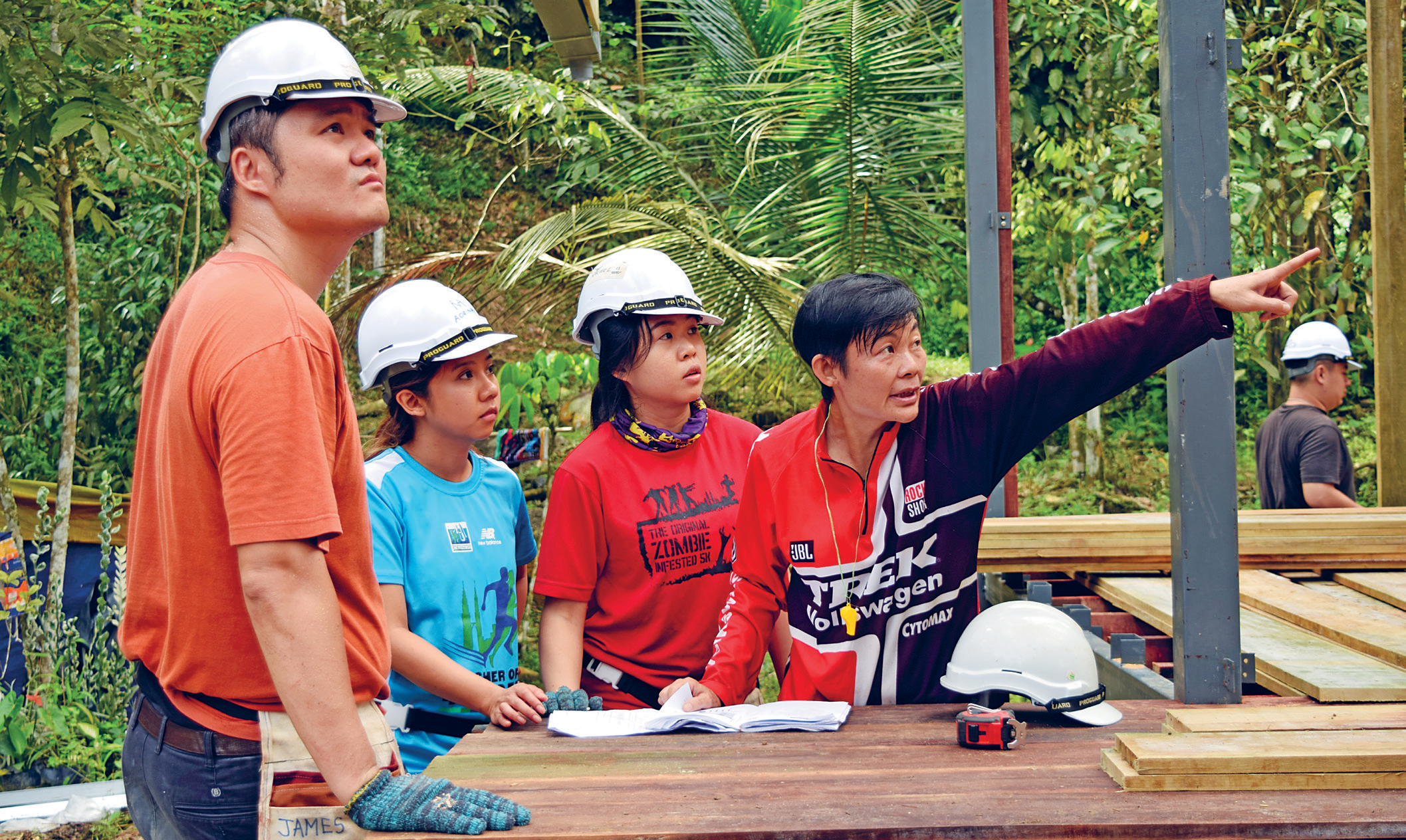
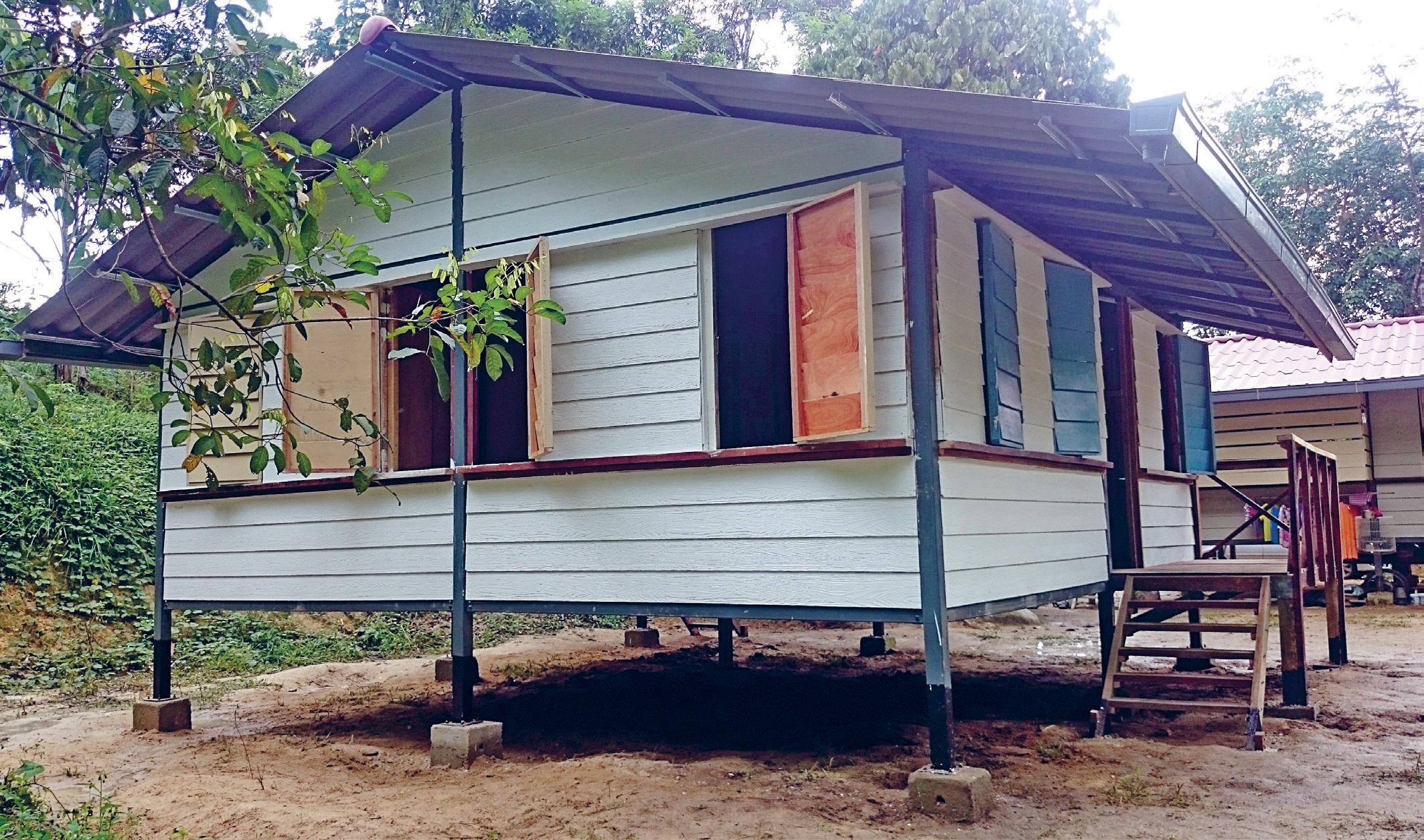
“Rehda is the one of the most established institutions representing the developer community as a whole in Malaysia, and the possibilities and synergies between what we do and what Epic does, building for social causes, are endless,” says Rehda Youth executive committee member Shaun Mok. As the youth division of the association, Mok and others like him represent the next generation of talent for the industry, with many being second-generation leaders groomed to helm their respective organisations. Pitting their resources, energy and drive behind Epic’s mission to enact social change at the grassroots level, they have proven themselves leaders in their own right. Even more impressive, the inaugural collaboration at Kampung Hulu Tamu, located near Batang Kali, Selangor, saw Rehda Youth members building a 440 sq ft, four-module home by following building guidelines developed by Epic Homes (a subsidiary project of the Epic Collaborative) emphasising simplicity and versatility. Taking place from Oct 30 to Nov 1, the build saw more than 30 participants including friends, family and Epic personnel, braving the sweltering heat and challenging conditions in a secondary jungle far removed from the conveniences of modern project sites to fabricate the home’s structure from the ground up, including footing, flooring, walls and roofing features.
A scalable solution
In total, Rehda Youth has committed over RM70,000 to the endeavour, with RM42,000 covering the materials and logistic costs for building the house and the remainder going towards transport, lodging, food and other associated expenses. Outlays for Epic buildings however vary from site to site, depending on the number of modules planned as well as the location’s accessibility. “When we first started out in 2010, we looked around for systems we could adopt that would allow ordinary people to build (a house), making it as easy as Lego bricks or Ikea assembly. Out of that came a pilot home, and from there, we learned that it is very much possible to build a house within three days,” says Epic Collaborative founder and CEO John-Son Oei. The success of Epic’s system lies in its adaptability, accommodating everything from two-module, 300 sq ft homes suitable for smaller households of one to three people to larger, double-storey residences featuring amenities such as rainwater harvesting, wastewater and septic tank facilities, that require four days to build and approximately RM58,000 in costs. Build time was a critical consideration in formulating the guidelines, taking into account the diverse schedules and backgrounds of participants as well as the challenges involved in training a large group of potential strangers without prior experience into an effective construction workforce within a tight timeframe
Some assembly required
To streamline the process, builders are assigned to teams headed by specialists who have worked on at least three projects, having passed an advanced building course, culminating in an evaluation build. Each specialist supervises a particular aspect of construction such as structure, roof or walls, and is supervised in turn by a master builder with experience in having worked on at least six builds. Epic Homes has worked with over 2,000 builders, both public and corporate, to deliver 68 homes to needful communities all over Malaysia. To date, these include orang asli settlements as well as the flood-stricken families of Kampung Serasa in Kuala Krai, Kelantan, whose homes were destroyed in the December 2014 disaster. “In collaborating with Epic, Rehda Youth’s vision is to see how and where else we can use the expertise we have in our industry and within our businesses to assist them, be it financially, through technology or even (by sharing) contacts. What I’d like to believe is that even in the rural context, it is possible to master plan a development without sacrificing the way of life that its residents are accustomed and entitled to,” says Mok. At Kampung Hulu Tamu, Epic Homes has come full circle, as it is also the first orang asli village that the social enterprise began building houses for during its formative years. Today, its initial mission in the community is nearly complete, having built the penultimate home for the kampung folks through its collaboration with Rehda Youth.
Reaching out
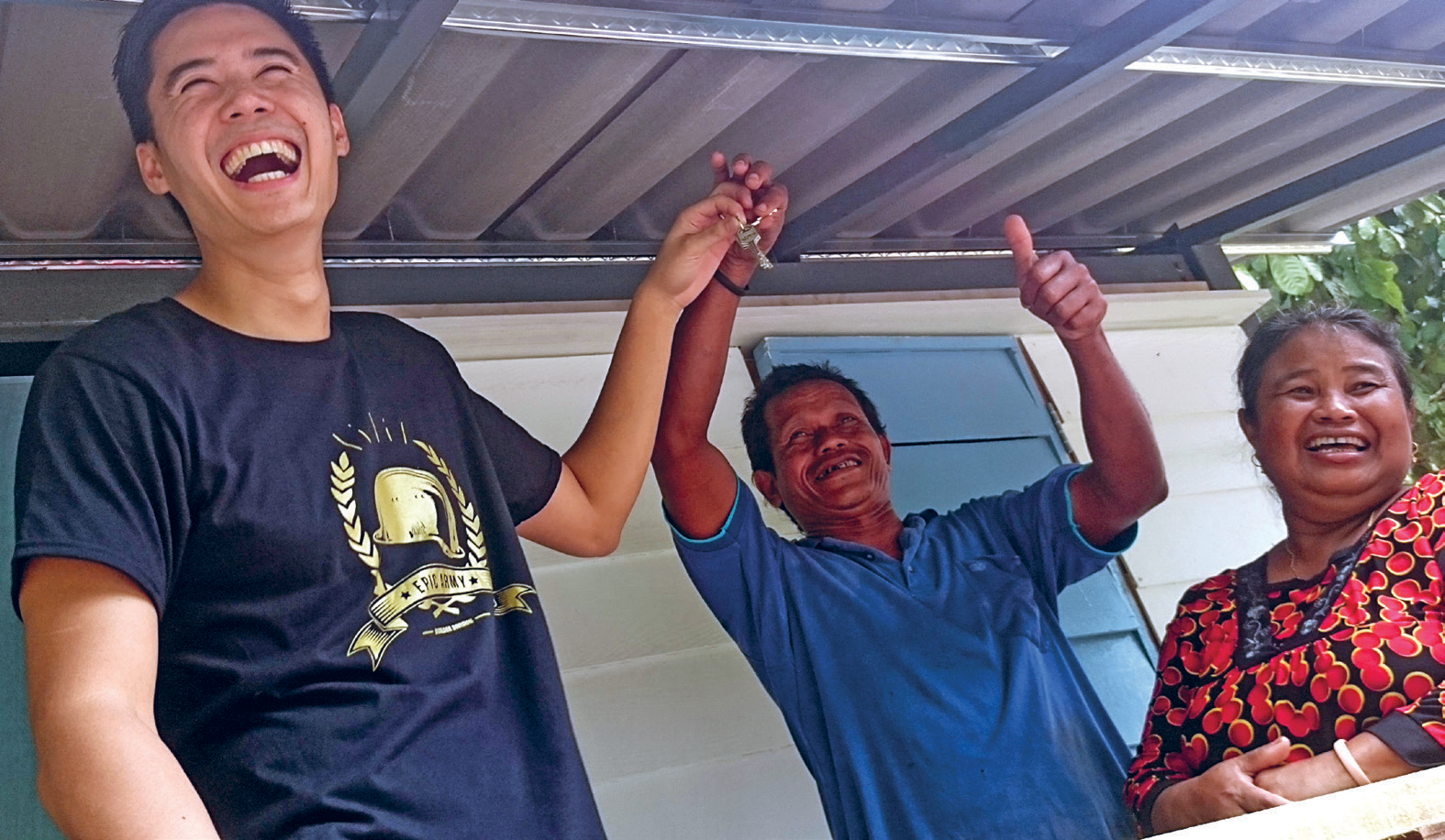
The home has already been handed over to Sari, a 55-yearold Kampung Hulu Tamu resident and breadwinner for a family of seven. Together with his wife Sadiah, 50, Sari has moved into the home with three of his children who are unmarried, continuing to support them through his work as a rubber tapper. They are the 10th out of 11 families in the village to receive shelter through Epic Homes, with priority determined by a need and severity analysis. Sari’s previous accommodation was a temporary structure made from non-durable materials such as untreated timber, bamboo and leaves, with safety concerns such as a leaking roof, dark internal spaces and narrow pathways being part of the daily reality back then. Many youths are drawn to the collaborative and the chance to make a meaningful impact in the lives of people like Sari and his kin, while embarking on a physical workout in the process of building a house. It is a curious blend of idealism tempered with the kind of down-to-earth pragmatism required to build a structure proof against the rigours of time and Malaysia’s tropical weather that lends an undeniable energy to each project. “I actually learned about Epic from a newspaper article. It wasn’t my goal to be a specialist at the time; I just wanted to build a house. I have a background in industrial design, and I’m good with my hands. After my first (build) project, they encouraged me to apply for the position, so I was (already) an apprentice by the second project,” says Jix Foo, a 31-year-old interior designer from Kuala Lumpur, who has worked with Epic for the past year and a half. “It was a steep learning curve over the three-day build at Batang Kali. Besides learning how to operate a variety of tools and identifying construction materials, I found that having an open mind to accept instructions, ideas and suggestions is crucial when trying to build anything,” adds Rehda Youth branch acting chairwoman Carrie Fong.
Anatomy of an abode
In general, each modular home constructed by Epic comprises a steel frame structure atop concrete footing supported by a timber substructure clad with fibre-cement boards. Lightweight internal partitions divide the interior into various modules, which can serve as bedrooms, kitchens, living rooms and more. Specific targets are set for each day, with 100% of the footing and steel/timber structural framework aimed for completion by the first nightfall; an emphasis on external walls, roofs and flooring on the second day; and the last day given over to “cosmetic” embellishments such as entrance walls, staircases and painting as well as cleaning activities. At Kampung Hulu Tamu, Rehda Youth members and Epic coordinators alike worked through the daylight hours to hit each construction watershed, aided by surprisingly clement weather which only saw light rainfall towards the end of the third day. Despite the light shower, a record-breaking effort from the roof team ensured adequate shelter from the elements for the entire group. “The build finished early, yet the quality was superb. Sari and one of his sons, Jief, were building with us during the three days. We took the opportunity to speak with them and learn about their lives during their team rotations,” says Epic Homes master builder Esther Chit. “I find a lot of inspiration working with the Epic organisation. Many participants are still students at the college level, but they’ve focused youthful idealism into something very powerful. Now that some of us have got a taste of what it’s like to do this sort of work, we’ll use this to encourage the rest of our Rehda Youth members to join future collaborations,” concludes Rehda Wilayah branch secretary Chan Kin Meng.